September 20, 2026
What If Your Brain Is Actually Two Brains in One?
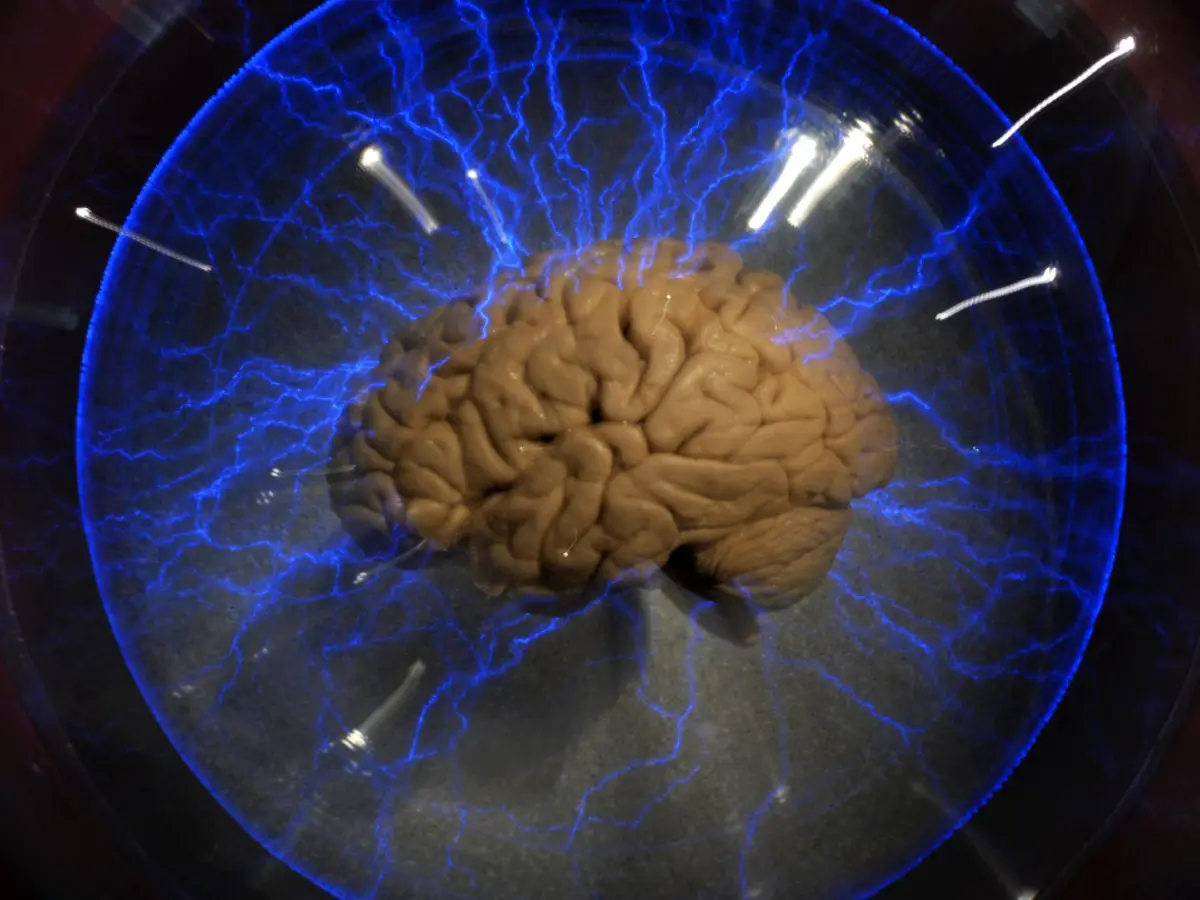
We usually think of the brain as one organ. Different areas may control different things, but they are all supposed to be pieces of the same system. New research from Stanford Medicine is challenging that idea. Scientists have found evidence that the human brain may actually be built from two ancient nervous systems that develop separately before eventually joining together.https://med.stanford.edu/news/all-news/2026/09/two-separate-brains.html
One system forms the forebrain and midbrain, including areas involved in language, reasoning, consciousness, memory, and complex thought. The other forms the hindbrain, which controls some of the functions we rarely have to think about, such as breathing, heartbeat, sleep, swallowing, and movements of the face and throat. Researchers discovered that these two regions trace back to different types of early embryonic cells. Even more surprising, versions of this split can be found across hundreds of millions of years of evolution.
This discovery may sound like an interesting biology fact, but it could have important medical consequences. Scientists have struggled for years to grow certain hindbrain neurons in the lab. Once the Stanford researchers realized that these cells begin through a different developmental pathway, they were able to produce functional human hindbrain motor neurons from stem cells. That could give researchers a much better way to study diseases such as ALS and spinal muscular atrophy, which damage neurons involved in movement, swallowing, and breathing.
What I find most fascinating is how much we can still learn about something as familiar as the human brain. We have mapped its regions, scanned its activity, and studied it for centuries, yet a basic assumption about how it forms may have been wrong. The brain sitting inside your head may look like one organ, but its story appears to have begun as two very different systems that evolution eventually brought together. Sometimes the biggest scientific discoveries do not come from finding something completely new. They come from realizing that something we thought we understood was much more complicated all along.
Thanks for reading my blog !
MedMuse